How Subtitle Timing Keeps Viewers Watching.
12 November, 2026· Article by Alex Reed


A streaming studio releases a drama with subtitles in eight languages and receives viewer complaints within a weekend because the lines flash by faster than anyone can read them and a joke in the final scene appears two seconds after the actors have already laughed. The dialogue was brilliant and the translation was accurate but the subtitles had been timed to the speech and not to the reading speed of the audience.
Subtitles are read while the viewer is also watching faces and landscapes and so every line has to fit a limited number of characters and stay on the screen long enough to be understood. A translation that is faithful to every word but too long for the time available forces the viewer to choose between reading and watching and many viewers simply stop watching.
Many productions still send a finished video to subtitling a few days before release with no script and no glossary and no notes on character names and then discover that the same person is called by three different spellings across episodes. The better habit is to share the script and the style guide and the list of names before the first line is timed.
The good news is that this does not need a large budget because a clean script and a short style guide and one review pass by a native viewer solve most of the problems that appear when a video crosses a border. Well timed subtitles also help viewers who watch with the sound off on their phones.
This article explains why subtitle timing decides whether viewers keep watching and it covers what to prepare before subtitling and how to handle a few languages that distributors often request and where to find public reference material on the subject. It is general information and it does not replace the guidelines of a specific streaming platform.
Share the Script Before Timing the Lines
The first step is to send the subtitler the script together with the video and a list of character names so that every line can be shortened without losing the joke or the emotion. Distributors that release series in South Asia often order Pashto translation services for the subtitles and the title cards so that viewers read the story in their own language from the first scene.
Freelance subtitlers usually bill by the minute of video and many of them now rely on an invoicing tool to send a clear statement with the duration and the language pair so that the producer can approve payment without delay.
Respect Reading Speed in Every Language
Polish translation services are useful for productions released in Poland because the language changes word endings according to grammar and a line or a name in the wrong form looks careless to viewers who notice every detail. Reading speed also differs from one language to another and so a line that fits comfortably in one version can be too long in another unless it is tested.
Each language needs a short checklist that covers line length and reading speed and punctuation so that nothing in the subtitles changes meaning from one version to another and Polish translation services should follow the same list. Pashto translation services follow the same method for South Asia while Uzbek translation services and Tajik translation services help distributors who release in Central Asia and a native reviewer can confirm that every line sounds natural to a local viewer.
Keeping viewers watching across eight languages takes more than good timing, which is why many studios plan their releases with professional content marketing services that treat subtitles, trailers and descriptions as one connected launch instead of separate jobs. A planned approach lines up the script, the style guide and the release calendar early, so every language version is ready when the first episode goes live. It also means viewer feedback from one market can improve the next release instead of being lost between teams. For a studio that wants its stories to travel, that kind of organised content work is often what turns a single good drama into an audience that stays for the whole season.
Do Not Forget the Smaller Audiences
Many distributors treat the Romanian language as a minor request even though Romania has a large audience for series and films and its viewers prefer to follow dialogue in their own tongue. A release that offers the Romanian language for its subtitles and its trailers can reach viewers who would otherwise depend on a rushed second hand version. Our page on subtitling services explains what to check before a video goes live and for a clear overview of the craft the subtitles entry describes how text and audio are matched on screen.
The Romanian language also uses special letters that break in some fonts and in some video players so every line should be tested on the final screen and checked letter by letter before release. Uzbek translation services and Tajik translation services meet similar challenges with their own characters and the dubbing entry shows why some audiences prefer a spoken version to written lines.
Keep One Style Guide for Every Series
A short style guide with the character names and the preferred spelling and the rules for songs and signs should be written before the next season so that every subtitler uses the same choices for the same idea. Producers and editors and the person who manages localization can share it so that the message stays consistent in every language.
Reviewing the guide after every episode lets the team add the comments that viewers actually made and a coordinator who knows Pashto translation services and the Romanian language can update the list so that the lines stay lively and clear. Polish translation services and Uzbek translation services and Tajik translation services can follow the same guide and over time it becomes a small asset that the studio can reuse for every new series.
A subtitle that feels invisible protects the work of the people who made the story and that quiet precision is what lets a drama cross a border without losing its rhythm.
Recent Posts

Il Gergo dei Giovani nei Sotto...

Cómo Trabajar con Traductores...

Localização de Jogos para Ch...
Game Localization Mistakes Tha...
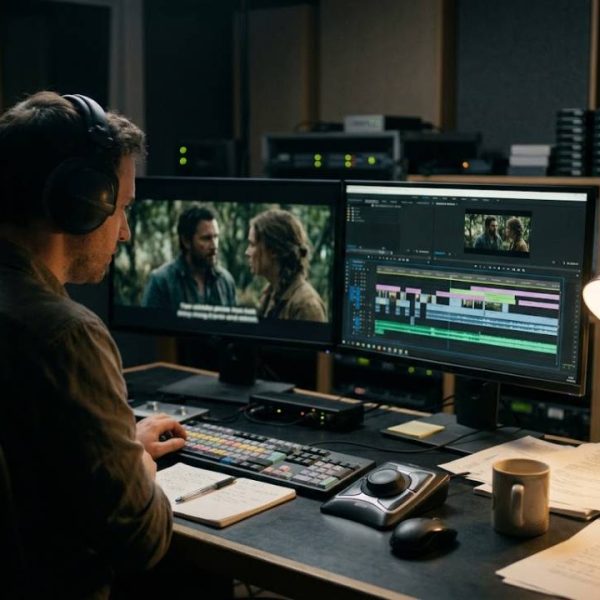
Untertitel für Videos, worauf...
Sous-titrage ou doublage, que ...
Share it.

Links
We use cookies
We use cookies to give you the best online experience, remember your preferences, and understand how the site is used. You can accept all cookies, reject optional ones, or choose which categories to allow.
Privacy PolicyCookie preferences
Choose which cookies we can use. Necessary cookies stay on because the site cannot work without them.
For more details, read our Privacy Policy.