Why Video Game Localization Breaks When AI Takes Over.
04 May, 2026· Article by Taylor Bennett


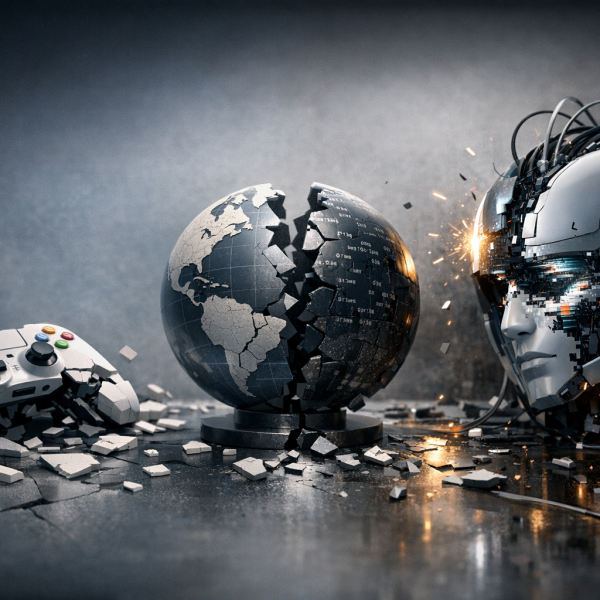
As game studios race to ship titles faster and cheaper, many are betting heavily on artificial intelligence to handle translation and localization. On paper, it seems perfect: instant output, lower costs, and support for dozens of languages at once. In practice, however, handing the creative heart of localization entirely to AI can quietly sabotage a game’s quality, reputation, and revenue potential. Below is a breakdown of where things go wrong when machines take the lead and why human-driven localization still decides whether a game truly connects with players worldwide.
Main Research
Video games present unique localization challenges, from in-game dialogue and cutscenes to UI text and cultural references. Professional video translation services bring the human judgment needed to preserve tone, humor, and narrative intent across languages. While AI can assist with volume, the creative adaptation still demands expert linguists.
1. AI Misses the Soul of Storytelling
Video game narratives rely on nuance, subtext, and emotional buildup. AI is improving rapidly, but it still struggles with context-heavy storytelling. It may translate words correctly while completely losing tone, character voice, and emotional weight. A sarcastic line can become oddly serious, a heartfelt moment turns flat, and character personalities blur into generic speech. This breaks immersion and weakens the bond between players and the game world.
2. Cultural Nuance Gets Lost in Translation
Games are full of culture-specific references, jokes, idioms, and symbols. These elements must be carefully adapted to fit the target culture, not just transferred word for word. AI tends to preserve surface meaning while missing deeper cultural connotations. In some markets, this leads to confusion; in others, it risks offending the audience. For markets that are highly sensitive to cultural tone and politeness levels, working with a specialist such as a Turkish translation company helps ensure authenticity and avoids embarrassing missteps.
3. In-Game Terminology Becomes Inconsistent
Games use large, interconnected systems: abilities, stats, items, factions, locations, and more. Each element needs a consistent naming scheme across menus, dialogue, tooltips, and tutorials. AI translation often treats sentences in isolation, which leads to different terms for the same concept. A skill might be “Slash” in the tutorial, “Cleave” in the inventory, and “Cut” in combat text. Players quickly lose trust and become confused, especially in complex RPGs and strategy titles.
4. Player Experience Suffers in UI and UX
Localization is not just about language; it directly affects interface design and user experience. Text length changes across languages, and line breaks, button sizes, and layout must be adapted carefully. An AI might output decent sentences, but it will not automatically consider how that text fits into UI elements, controller prompts, or screen limits. Overflows, truncation, unreadable fonts, and mismatched button names all create friction that pulls players out of the experience.
5. Humor, Wordplay, and Slang Fall Flat
Humor is one of the hardest things to translate. Games lean heavily on puns, wordplay, memes, and region-specific slang. AI tends to handle these literally, which makes jokes seem confusing or simply unfunny. Worse, attempts to approximate slang can sound outdated or unnatural to native speakers. A comedic game that fails to land its jokes in a new market can feel dull, even if the core gameplay is solid.
6. Community Trust and Brand Image Take a Hit
Gamers notice poor localization immediately and are vocal about it. Screenshots of clumsy translations spread fast across forums and social media. Review scores drop, refund requests increase, and the game can be labeled as “low effort” or “cash grab.” Once a studio gains a reputation for relying on sloppy automated localization, rebuilding trust with that international audience is difficult and expensive. What seemed like a cost-saving shortcut can quickly become a long-term brand problem.
Automated game localization breaks on the things that were never in the string: who is speaking, how formally, and whether this line is a joke. Those are decisions a person makes from context and a system guesses at. The same gap governs everyday commercial work, which is why english to spanish translation between markets with very different registers still needs a translator making deliberate choices about tone.
7. Compliance and Sensitivity Issues Are Overlooked
Different regions have unique regulations, content restrictions, and cultural red lines related to religion, politics, violence, sexuality, and historical events. Localization experts know how to adapt content to meet local expectations without sabotaging the core experience. AI, however, has no built-in understanding of legal nuance or cultural taboos. An unreviewed automated translation can accidentally violate guidelines or provoke backlash from communities and regulators.
8. Live Service Games Need Human-Led Adaptation
Live service and multiplayer titles roll out frequent updates, seasonal events, and community-driven content. Localization for these games is ongoing, not a one-time task. Event names, limited-time items, and promotional campaigns must be clear, appealing, and culturally tuned in every region. AI can help with speed, but without human oversight, updates can become incoherent over time, eroding engagement and confusing both new and returning players.
9. Machine Output Still Demands Costly Human Fixes
Studios often assume AI will dramatically cut localization costs. Yet if the output quality is mediocre, teams must bring in professional linguists to edit, correct, and harmonize terminology. Fixing broken foundations is more time-consuming than doing it right from the start. Editors must review every string, rebuild glossaries, and re-test content in-game. Any savings achieved by using AI-only workflows often disappear once quality assurance and rework are factored in.
10. Player Empathy Cannot Be Automated
The strongest localizations come from professionals who understand gaming culture, follow community discussions, and genuinely care about how players will feel. They notice when a line will resonate, when a joke might sting, or when a reference misses the mark. AI processes patterns; it does not experience the joy, frustration, or nostalgia that players feel. Without that human empathy, localization becomes functional text rather than a crafted experience tailored to each region’s audience.
Video game localization blends subtitling, voice acting, and cultural adaptation into one interactive experience. When AI handles dialogue without human oversight, character voices and story nuance often break. Preserving quality across languages demands expert multimedia translation
Conclusion
AI can be a powerful tool in the localization pipeline, helping with draft translations, automation, and scale. But when it fully replaces human expertise, the result is a brittle, surface-level version of the game that fails to connect with players. Localization is not just a technical step; it is creative adaptation, cultural mediation, and player advocacy all at once. Studios that invest in human-led localization, supported rather than replaced by AI, protect their brand, respect their players, and unlock the full global potential of their games.
Recent Posts
Game Localization Mistakes Tha...

Untertitel für Videos, worauf...

Sous-titrage ou doublage, que ...

The SRT File Explained, and Wh...

El Streaming Exige Traducción...

Anche I Video Globali Chiedono...
Share it.

Links
We use cookies
We use cookies to give you the best online experience, remember your preferences, and understand how the site is used. You can accept all cookies, reject optional ones, or choose which categories to allow.
Privacy PolicyCookie preferences
Choose which cookies we can use. Necessary cookies stay on because the site cannot work without them.
For more details, read our Privacy Policy.